The Model Context Protocol reached 97 million monthly downloads by March 2026. The number one use case? Personal knowledge management. People want to ask their AI assistant about their own notes, bookmarks, and research — and get answers grounded in real sources, not hallucinated from training data.
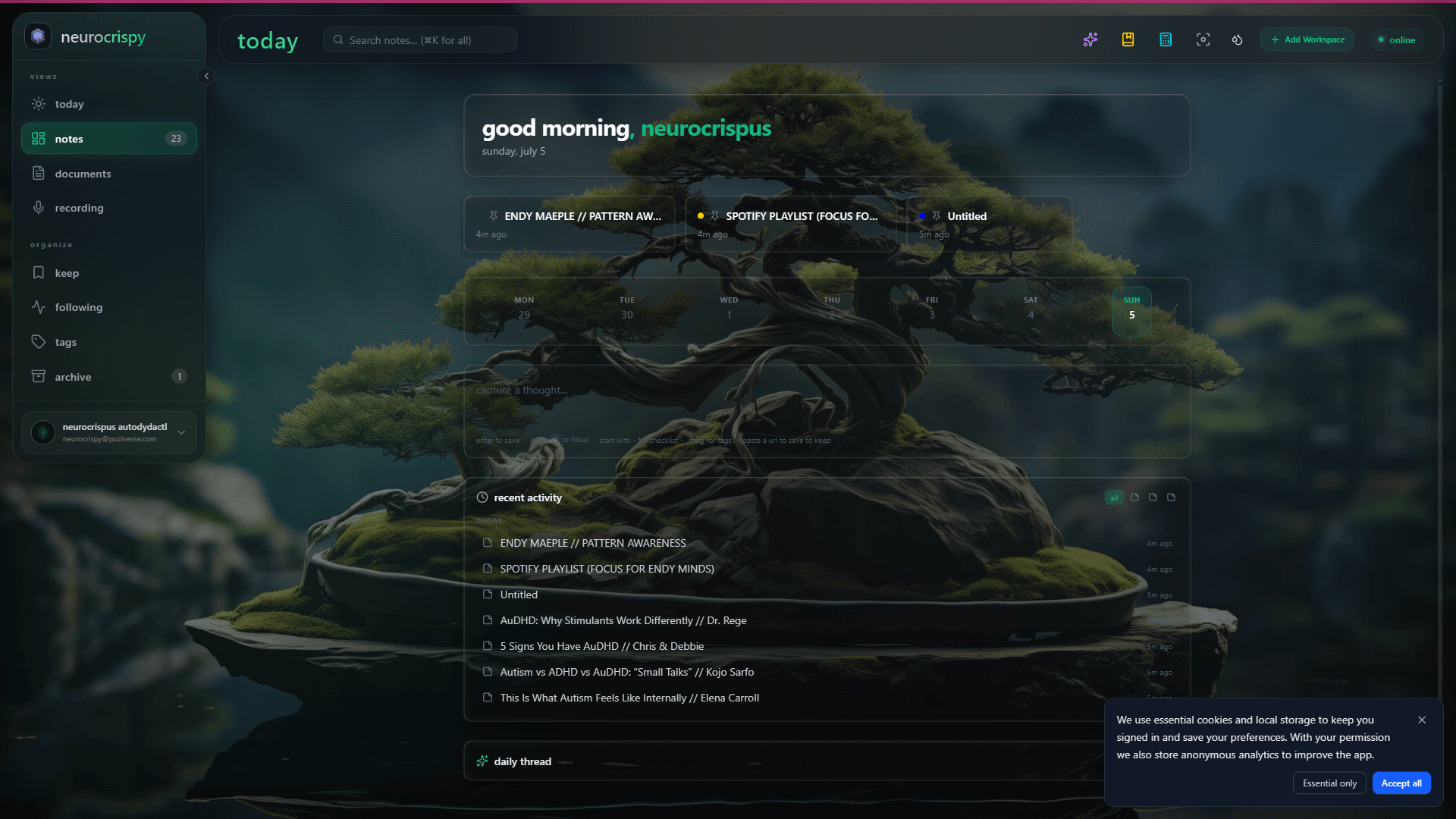
Glassy ships with a built-in MCP server. No separate process to run, no community plugin to install, no terminal required. Generate a key, paste a config snippet, and Claude Desktop, Cursor, Windsurf, OpenCode, Hermes, Openclaw, Pi, or any MCP-compatible client can search your entire knowledge base — bookmarks, notes, documents, and Obsidian vault files — with citations. For a broader look at where MCP stands in 2026, see our state of MCP overview.
What you need
- A Glassy account (Free tier works — you get 120 MCP queries per hour)
- An MCP-compatible AI assistant such as Claude Desktop, Cursor, Windsurf, OpenCode, Hermes, Openclaw, or Pi
- Five minutes
Step 1: Generate an MCP key in Glassy
Open Glassy at glassy.fyi
and navigate to Settings → Integrations. Look for the MCP Server section.
Click Generate MCP Key. You will get a key starting with
gky_mcp_ and a ready-to-paste
config snippet for Claude Desktop.
The snippet looks like this:
{
  "mcpServers": {
    "glassy": {
      "url": "https://app.glassy.fyi/mcp",
      "headers": {
        "Authorization": "Bearer gky_mcp_your_key_here"
      }
    }
  }
}
Step 2: Add the config to Claude Desktop
Open Claude Desktop and go to Settings → Developer → Edit Config.
This opens the claude_desktop_config.json
file. Paste the Glassy snippet into the mcpServers
object. Save the file and restart Claude Desktop.
If you already have other MCP servers configured, just add the "glassy"
key alongside them. No conflicts.
Step 3: Ask Claude about your knowledge
Start a new conversation in Claude Desktop. Try:
- "What do I have in my knowledge base about transformer architectures?"
- "Search my bookmarks for anything about privacy-first design"
- "Summarize my recent notes on the Q3 product launch"
- "What research have I saved about WebGPU?"
Claude will call the Glassy MCP server, which runs hybrid BM25 + vector search across your corpus and returns results with source citations. You see which note or bookmark each answer came from.
What Claude can access
The Glassy MCP server exposes fifteen tools:
- search — Hybrid BM25 + vector search across your entire corpus
- read — Fetch the full content of a specific note or bookmark
- create_note — Write a new note from the conversation
- create_bookmark — Save a URL as a bookmark
- list_tags — Browse your tag catalog
- get_stats — Workspace statistics (item count, index health)
- glassy_obsidian_proxy — Query your Obsidian vault through Glassy
- Plus three more tools for resource browsing and recent captures
Rate limits
Free accounts get 120 MCP queries per hour. Pro accounts get 1,200. The server is real infrastructure — honest limits keep it sustainable. Most conversations use 3–5 queries, so 120 per hour covers plenty of exploration on the Free tier.
Privacy
Your corpus stays on your Glassy instance. The MCP server runs behind your authentication. The only thing that leaves your server is the specific query your AI assistant sends — and the results come back to that assistant, not to anyone else. Your notes are never training data.
Cursor, Windsurf, OpenCode, Hermes, Openclaw, and Pi work too
The same MCP key and config work in any MCP-compatible client. Open your tool's MCP settings
(for example, ~/.cursor/mcp.json in Cursor
or the equivalent in Windsurf, OpenCode, Hermes, Openclaw, and Pi), paste the same snippet, and restart.
You can now ask questions about your knowledge base while coding — useful for pulling research notes,
design decisions, or documentation into context without leaving your editor.