Neurodiversity
Built by non-linear minds.
Glassy isn't "ND-friendly" as a marketing line. It's the reason the product exists. We're ADHD, autistic, dyslexic, and AuDHD — and we got tired of fighting tools designed for someone else's brain.
What that means on a Tuesday.
Start smaller
A blank capture surface beats a required system. Put the thing down first. Structure can wait.
Return kinder
No streak guilt, no angry overdue theater. The product should welcome you back, not keep score.
Find faster
Search should forgive the fact that you remember the shape of the idea before you remember its exact title.
Our design principles
- Quieter by default. No streaks, no nudges, no red badges. You decide when something needs attention.
- Capture before structure. Throw it in. Organize later. Or never.
- Working memory is sacred. Anything you saw on screen, you can find again in one keystroke.
- Sensory respect. WCAG AA contrast, reduced-motion honored, dyslexia-friendly fonts available.
- Privacy is access. Local AI means medical, therapy, and personal notes never leave your device.
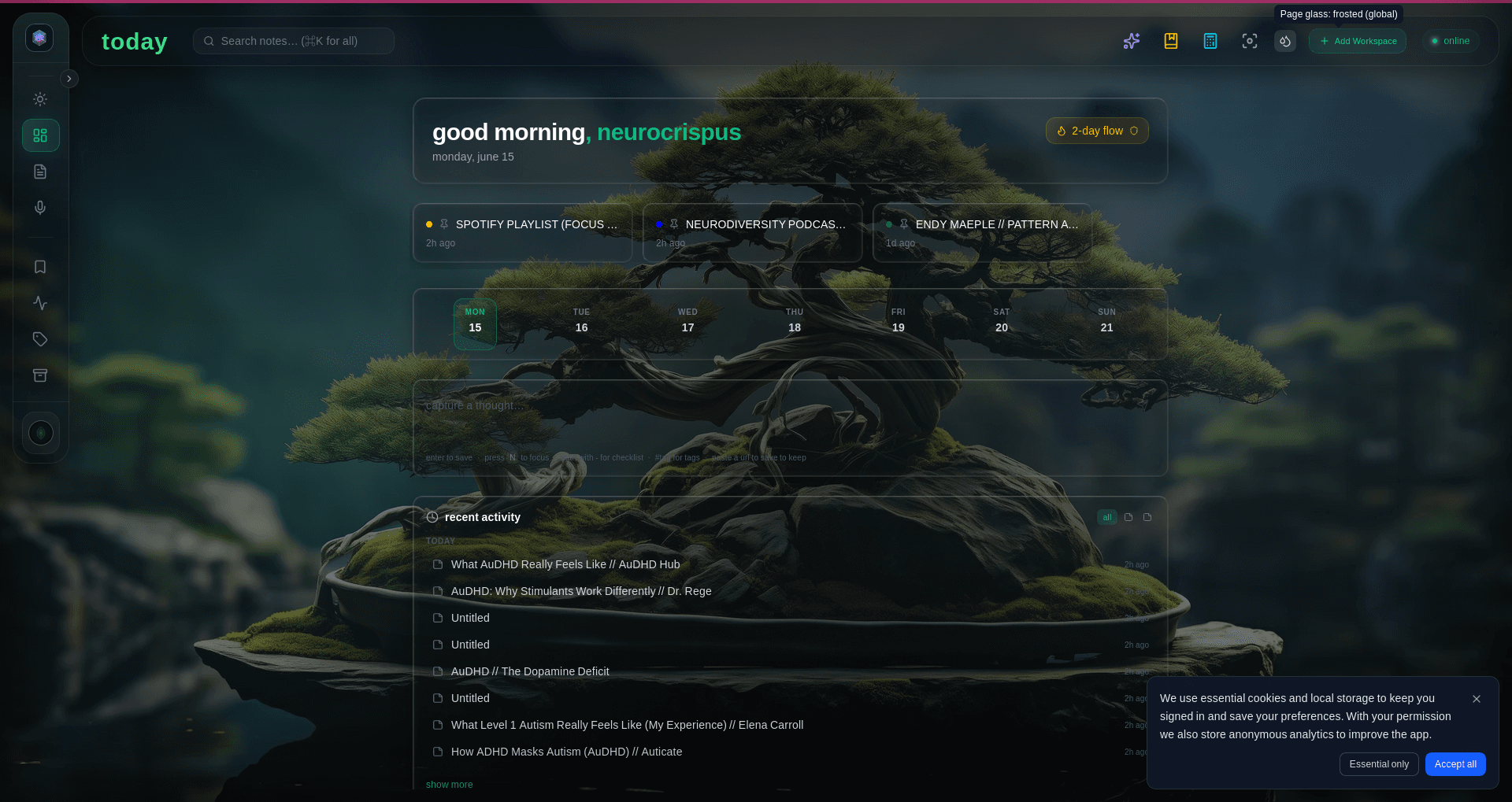
Screenshot: Today view with Focus Rail
Specific features
Focus mode
Hide every UI element except the document. One key to enter, one to leave.
Reduced motion
If your OS asks for less motion, Glassy listens. No exceptions.
Inbox
A single, fast capture surface. Triage when you have spoons. Not before.
Plain language
Buttons say what they do. Errors say what to try. No idioms, no winks.
Is this medical advice?
No. It is product design from people with lived experience, built to reduce friction rather than diagnose anyone.
Do I have to use an ND mode?
No. The calmer defaults are the product. Accommodation should not feel like a hidden setting.
What if my system falls apart?
Then Glassy should still be usable. Capture, archive, search, return. No ceremony required.