The Model Context Protocol (MCP) is an open standard that lets AI agents query external tools and data sources. Glassy ships with a built-in MCP server that exposes your knowledge base to Claude, Cursor, Windsurf, OpenCode, Hermes, Openclaw, Pi, and any MCP-compatible client. No separate process to run. No third-party plugin to install.
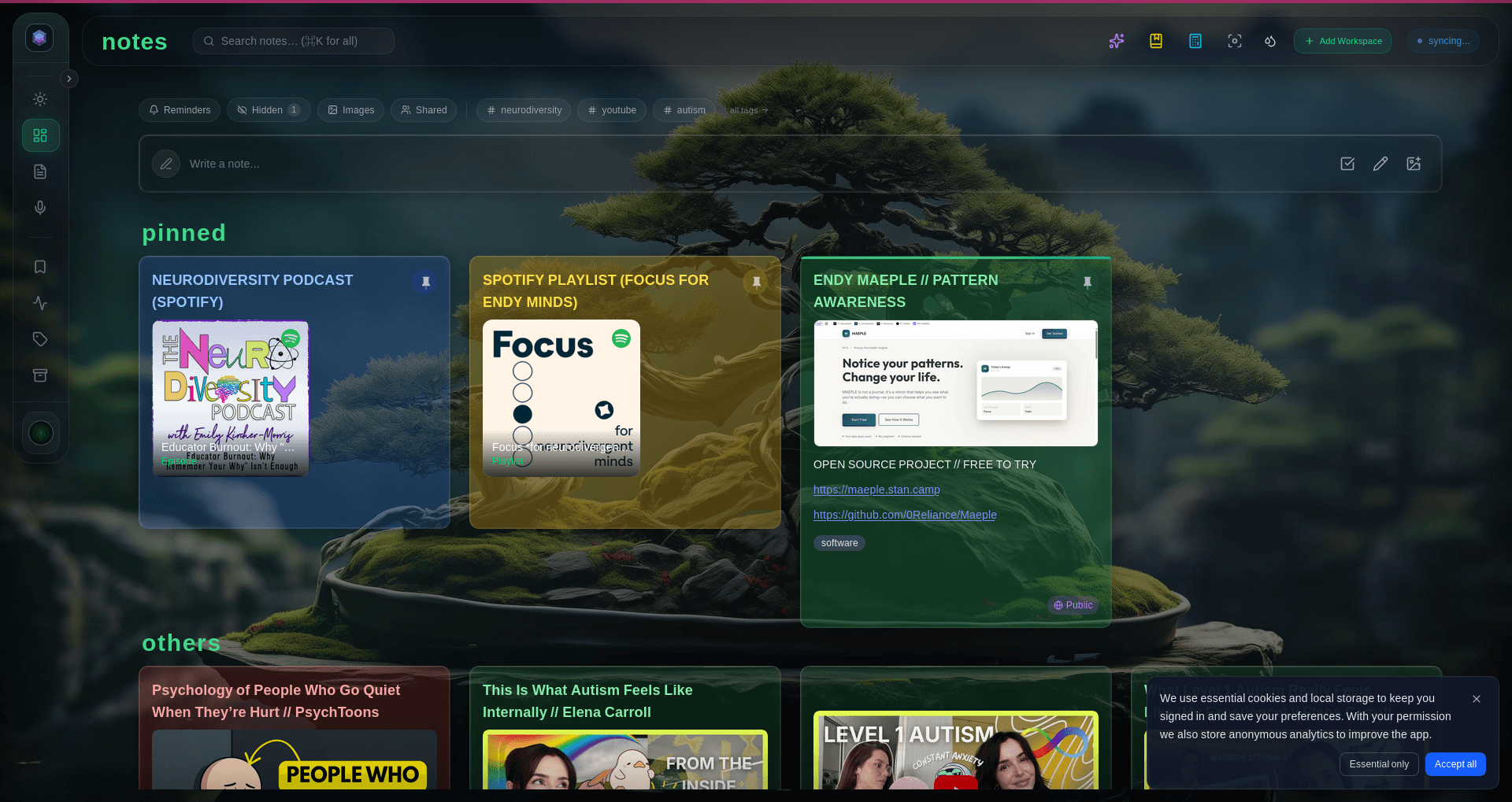
Fifteen tools, three prompts
The server exposes fifteen tools: search, read, create note, create bookmark, list tags, get stats, and more. Three prompts provide templates for common workflows — research summarization, link extraction, and knowledge gap analysis. Six dynamic resources expose your tag catalog, recent captures, and workspace stats.
Stateless transport
Every JSON-RPC message is a separate HTTP POST. No persistent connections, no WebSockets, no state to manage. This makes the server trivially scalable and compatible with any MCP client. Rate limiting is per-user, keyed by your MCP token — not by IP address.
Security boundaries
The MCP server runs behind your Glassy authentication. You generate a dedicated MCP key in Settings, scoped to your account. DNS-rebinding protection prevents cross-origin abuse. Rate limits protect against runaway agents. Your data never leaves your Glassy instance — the agent queries it in place.
Getting started
Open Settings in Glassy, navigate to the MCP section, and generate a key. Copy the config snippet and paste it into Claude Desktop, Cursor, Windsurf, OpenCode, Hermes, Openclaw, Pi, or any MCP-compatible client. That is it. Ask your AI assistant about your notes, bookmarks, and research — it will query your real corpus and return answers with citations.